
The three steps of the pipeline
The pipeline is three steps in a fixed order. The order is not a preference: step 2 consumes what step 1 produces, and step 3 consumes the same layer again.
Step 1, keywords
The pipeline starts with keyword coverage. Without focus keywords in the backend, the internal linking engine has nothing to work with.
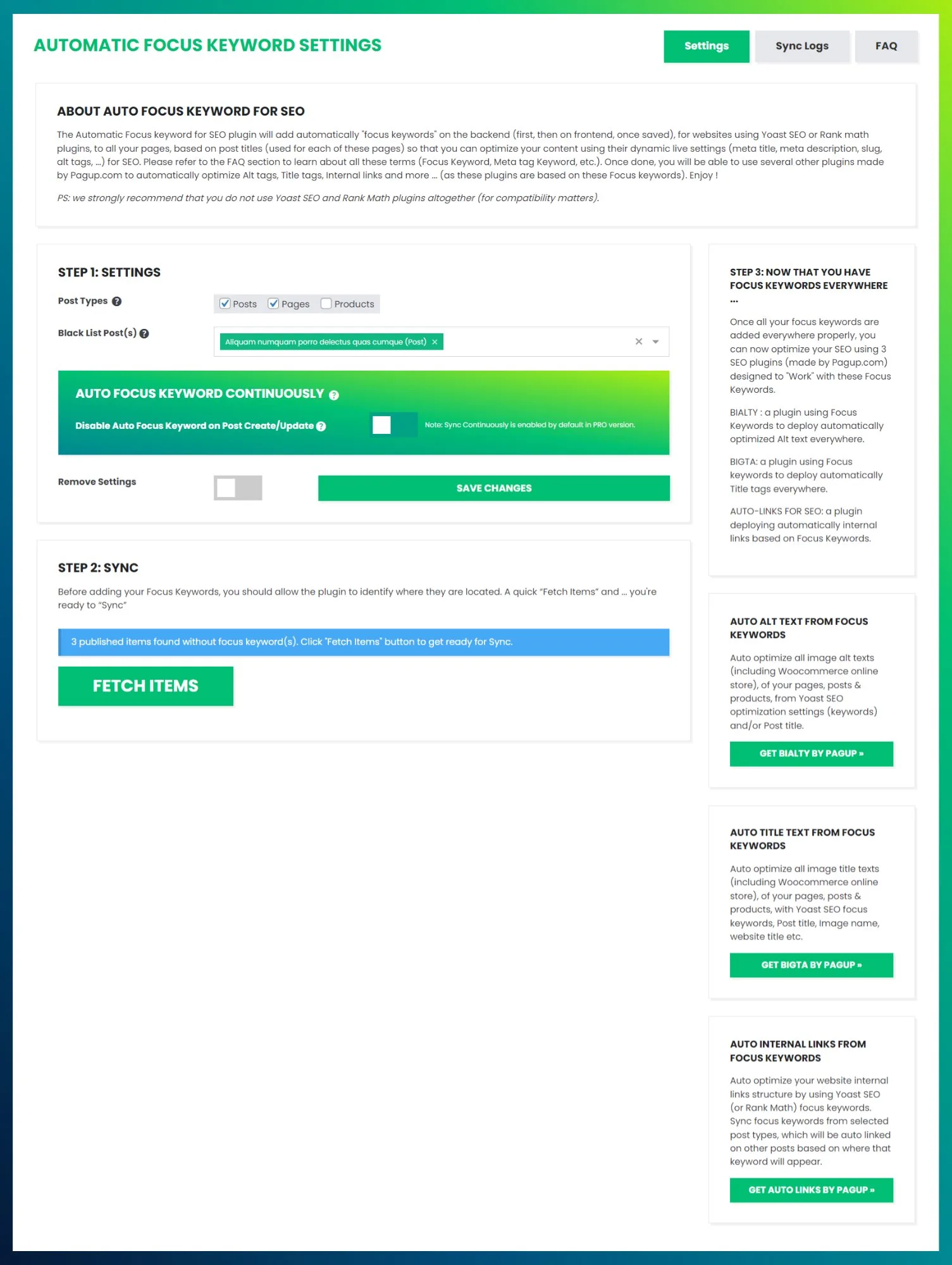
What it produces. After FETCH then SYNC, every processed page carries a focus keyword value stored in whichever supported SEO plugin is active. That value is both the optimisation target for the page and the anchor text signal consumed in step 2.
Where judgement is still required. The auto-assigned keyword is the page title, and that is a starting point, not a verdict. Review and adjust the keywords of your most strategic pages. The limitations page covers when the title makes a poor target.
Step 2, links
With the keyword layer in place, the linking engine can operate.
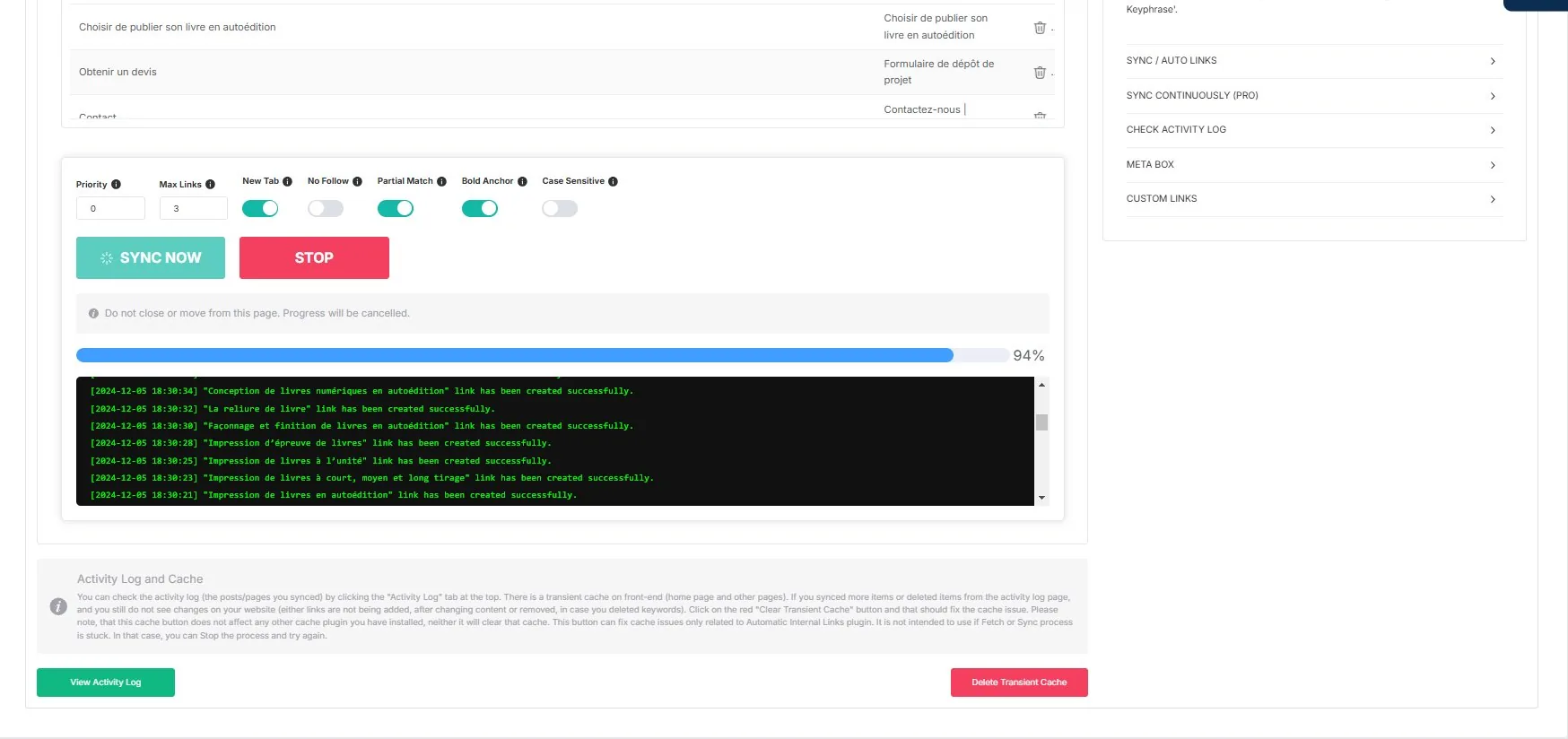
What it produces. After SYNC, or continuously with AUTO LINKS in Pro, the plugin builds linking rules across your content. Each rule uses a focus keyword as anchor text and points to the page where that keyword was declared.
The logic. The plugin scans page content for text matching stored focus keywords. When a match is found and eligible, it is wrapped in an <a> pointing to the keyword's source page. The process respects every configured exclusion, the per-page limit, the priority values and the matching rules.
Augmenting it. SYNC covers everything the keyword layer can express. For a custom anchor, or an external authority link, use manual links.
Step 3, ecosystem
The keyword layer built in step 1 is not consumed by Automatic Internal Links alone.
BIALTY, bulk image alt text. BIALTY reads the same focus keyword signals from Yoast SEO, Rank Math, All in One SEO and SEOPress, then injects contextual alt text on rendered pages. Without focus keywords it falls back to post titles or filenames, which is usually less precise.
BIGTA, bulk image title attribute. BIGTA does the same for the title attribute on images.
Better Robots.txt. Better Robots.txt does not consume focus keywords, but it completes the crawl governance layer. Optimised internal links plus a well-configured robots.txt give search engines the clearest signals about structure and priority.
The compound effect. Each plugin addresses a different surface — keywords, links, images, crawl — and they share one source of truth. The same focus keyword drives the page analysis, the internal link anchors, the image alt text and the image title attributes.
Why the order is not negotiable
Automatic Internal Links cannot create links if there are no focus keywords to use as anchors. That is the whole reason Auto Focus Keyword runs first.
The corollary is worth stating too: a weak focus keyword in step 1 produces a weak anchor in step 2, everywhere on the site at once. The review step is not optional polish; it is what protects both layers.
Read next
- The pipeline — what changes, and why it matters
- Case studies — three site types, three workflows
- No focus keyword set — if step 1 has not happened yet